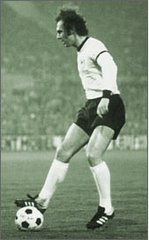
Enter the top ten defeats of all time. Naturally many matches are remembered for incidents occurring of and on the pitch, perhaps with violent clashes, footballing master classes and shifts in power concerning who rules the footballing world.
France (4) 3-3 (5) West Germany 1982 World Cup Semi- Final
An epic football match marred by Harold Schumacher’s tendency to rush out to take out man or ball, in a mindset where the end justifies the means, as it did for the Germans. The match was level between the two sides with Littbarski rifling in a shot and a Platini penalty to equalise. Then Schumacher took out substitute Battiston (whose attempted shot went just wide), knocking him unconscious and leaving him with two less teeth. Later when Platini went for a header, when Schumacher came to claim the ball; Platini was left clutching his shoulder. Tresor scored with a hooked finish for France, followed by a thunderbolt from Giresse, Rummenigge pulled one back, before Fischer sent the match to penalties – a first in the World Cup. Schumacher made the headlines, by moving early off his line (a ploy not noticed by the officials) and saving twice from Six and then Bossis. The great French team of Platini and Tigana could not progress ‘because the officials did not do their job’ as the BBC commentator put it.
Real 0 -5 Barcelona 1973 Primera Division
After being voted out of the captaincy at Ajax, Cruyff left for a club that too was valued on playing beautiful football. In this match he crossed superbly twice to result in goals, and scored a gorgeous goal. Receiving the ball in the edge of the area from the left he burst forward to the left past the despairing lunge of a Real defender, running towards another defender, he quickly shifted the ball onto his right then again onto his left, always shielding the ball from the defender. To top off a superb performance, he finished with aplomb, blasting the ball through the keeper’s legs. To this day Cruyff and his Barcelona team-mates hold the record for Real’s heaviest defeat in the Bernabeu in an El Clasico, an astonishing achievement.
Arsenal 4-5 Man Utd 1958 Old Division One
The Busby babes came to North London, with a brand of exciting attacking, youthful football. They raced up a 0-3 lead in the first half, and the match seemed to be as good as over. Yet in the space of three minutes The Gunners came racing back and clawed back to a 3-3 score-line. The reputation of the Manchester United side came through, showing mental strength to score twice through the devastating Denis Viollet and Tommy Taylor to an unreachable 3-5 lead. Yet in the dying minutes The Gunners pulled a goal back, leaving a tense finish in which Vic Groves almost equalised. A few days later, the Red Devils flew out to Belgrade to meet Red Star in the European Cup. After a victory, their plane stopped to refuel in Munich. Therefore the game at Arsenal’s historical Highbury was to be the last arena where the famous ‘Busby Babes’ strutted their stuff in England.
England 3-6 Hungary 1953 International Friendly
The first defeat at Wembley by a team outside of the British Isles broke an undefeated streak since 1901 against such teams. Finally showed how different styles had evolved in contrast to the stereotypical gung-ho British football and it was no fluke. The Hungarians played a pass and move style, with a strike-force of ‘that fat little chap’ (The England player who referred to the Hungarian legend would later live to regret his words) Ferenc Puskas and Nandor Hidegkuti, who played in a revolutionary half-striker role, ghosting between the lines of midfield and attack, impossible to pick up. ‘The Mighty Magyars’ were seen to many as the influence to Rinus Michel’s ‘Total Football’ concept with their fluid formation and interchange of positions. The return game in 1954 was even more one-sided with Hungary annihilating England 7-1.
Real 11-4 Barcelona 1943 Kings Cup Semi Final
The words Generalissimo or Franco will crop up in remembrance of this semi-final. 3-0 up from the first leg, the Catalans were favourites to meet Bilbao in the final. Yet before the start of the second leg, they were paid a visit by the director of state security, who emphasized the unpatriotic Catalans were only living in Spain on behalf of the generous Franco. Therefore they were forced to throw the match, and even with ten men at half time, it is believed that only such a reason would cause such a loss. The conspiracy theorists continue to look to this dressing room visit. Real still managed to lose the final to Bilbao, after all of their favourite dictator’s help against their arch-rivals.
Friday, 28 December 2007


The 20 Greatest Defeats Of All Time (No. 15-11)
Continuing on from yesterday, here is the next five, which were influenced by pieces of magic, the event and social and moral talking points.
Real Madrid 0-1 Ajax 1973 European Cup Semi-final second leg
According to David Winner, author of ‘Brilliant Orange’ the greatest moment of Ajax’s ‘Golden Age’ was not a goal or a great save. It was a simple piece of juggling by a player who had idolised the legends which had graced the turf of the Bernabeu before him. Gerrie Muhren had the 110,000 fans applauding, rather than the customary white handkerchiefs away teams were used to. It was said to be the moment Ajax took over from Real Madrid as the true Kings of Europe. Having already won the two previous European cups, Ajax strolled to their third successive European Cup victory, having raised the Bernabeu to applaud the brilliance of totaalvoetbal.
Italy 3-2 Brazil 1982 World Cup Second Round
This was truly an occasion was for a phoenix to rise from the flames. His name blackened from a betting scandal and his critics rounding on the poor performances of his and the national’s teams poor ‘aimless’ play. They reached the second round on the back of three draws to meet a Brazilian side that truly brought back beautiful football. Falcao, Zico and Socrates, formed a midfield of vision technique and unlimited flair. Yet it was Rossi who struck first blood, ghosting in to score a free header. John Motson said the Brazilian school of footballing philosophy shows ‘how to play when you’re behind’. He was proved right when an awesome turn by Zico allowed him to release Socrates with a threaded pass. Yet Rossi replied with a brace, and even with a Falcao thunderbolt, Italy prevailed with Dino Zoff making crucial saves. ‘Thankfully skill will still prevail even though teams try to destroy it’. In hindsight, Motson’s words truly marked the ‘death of joga bonito’ as one internet forum member put it. Brazil’s light, glowing football did not prevail and it was loss for football in the long run.
Arsenal 2-1 Sheffield United 1999 Premier League
The unwritten rule can have a strong influence and it did until the English FA decided to ignore it from this previous season and onwards. Kelly was putting a ball out, so that his team-mate could receive treatment, or rather so that Bergkamp didn’t score. The resulting throw-in, was taken by Parlour to the Sheffield United players, but was intercepted by Kanu, who crossed for Overmars to slot home. The fact that giving the ball back is seen as an unwritten rule, no-one cannot be sure if all 22 players are playing to the same rule! The match was followed by a generous offer by Arsenal to replay the match, which Steve Bruce ‘expected’, yet in truth he had no right to. Arsenal won the return match 2-1, with no controversy.
Peru 0-6 Argentina – 1978 World Cup Second Round
The situation: Argentina needed to win by more than four goals to reach the final. Why? Brazil’s superior goal difference was blocking their path to World Cup glory. The conspiracy theory: The game was fixed. The Peruvian keeper had only let in 6 goals in his previous five games; He had Argentinean nationality too. Argentina had only scored 6 in their previous games; the exact margin they won this game by. Argentina progressed to the final where they used stalling tactics to unnerve the Dutch team in Estadio Buenos Aires, a cauldron of blue and white. The greatest mystery of all: they were winners of the FIFA Fair Play Award.
Germany 2-1 Holland 1990 World Cup Round of 16
After the second World War, the Dutch had moved away from it and had rebuilt. A few generations later, books were released about concentration camps, and trials were held for war crimes. Thus the new youth, which included the footballers, coached by Cruyff, in van Basten, Gullit and Rikjaard saw Germany as the enemy. This boiled over onto the pitch, with Rikjaard spitting at Rudi Voller, and this settled the match. Another aspect to the rivalry was the setting. Stadio Giuseppe Meazza. The AC Milan team of the nineties had a Dutch spine, and in contrast the Inter team, contained a number of Germans. Thus the match reflected a rivalry that was on a number of planes; club and international. The defeat also caused violent clashes on the Dutch-German border.
Real Madrid 0-1 Ajax 1973 European Cup Semi-final second leg
According to David Winner, author of ‘Brilliant Orange’ the greatest moment of Ajax’s ‘Golden Age’ was not a goal or a great save. It was a simple piece of juggling by a player who had idolised the legends which had graced the turf of the Bernabeu before him. Gerrie Muhren had the 110,000 fans applauding, rather than the customary white handkerchiefs away teams were used to. It was said to be the moment Ajax took over from Real Madrid as the true Kings of Europe. Having already won the two previous European cups, Ajax strolled to their third successive European Cup victory, having raised the Bernabeu to applaud the brilliance of totaalvoetbal.
Italy 3-2 Brazil 1982 World Cup Second Round
This was truly an occasion was for a phoenix to rise from the flames. His name blackened from a betting scandal and his critics rounding on the poor performances of his and the national’s teams poor ‘aimless’ play. They reached the second round on the back of three draws to meet a Brazilian side that truly brought back beautiful football. Falcao, Zico and Socrates, formed a midfield of vision technique and unlimited flair. Yet it was Rossi who struck first blood, ghosting in to score a free header. John Motson said the Brazilian school of footballing philosophy shows ‘how to play when you’re behind’. He was proved right when an awesome turn by Zico allowed him to release Socrates with a threaded pass. Yet Rossi replied with a brace, and even with a Falcao thunderbolt, Italy prevailed with Dino Zoff making crucial saves. ‘Thankfully skill will still prevail even though teams try to destroy it’. In hindsight, Motson’s words truly marked the ‘death of joga bonito’ as one internet forum member put it. Brazil’s light, glowing football did not prevail and it was loss for football in the long run.
Arsenal 2-1 Sheffield United 1999 Premier League
The unwritten rule can have a strong influence and it did until the English FA decided to ignore it from this previous season and onwards. Kelly was putting a ball out, so that his team-mate could receive treatment, or rather so that Bergkamp didn’t score. The resulting throw-in, was taken by Parlour to the Sheffield United players, but was intercepted by Kanu, who crossed for Overmars to slot home. The fact that giving the ball back is seen as an unwritten rule, no-one cannot be sure if all 22 players are playing to the same rule! The match was followed by a generous offer by Arsenal to replay the match, which Steve Bruce ‘expected’, yet in truth he had no right to. Arsenal won the return match 2-1, with no controversy.
Peru 0-6 Argentina – 1978 World Cup Second Round
The situation: Argentina needed to win by more than four goals to reach the final. Why? Brazil’s superior goal difference was blocking their path to World Cup glory. The conspiracy theory: The game was fixed. The Peruvian keeper had only let in 6 goals in his previous five games; He had Argentinean nationality too. Argentina had only scored 6 in their previous games; the exact margin they won this game by. Argentina progressed to the final where they used stalling tactics to unnerve the Dutch team in Estadio Buenos Aires, a cauldron of blue and white. The greatest mystery of all: they were winners of the FIFA Fair Play Award.
Germany 2-1 Holland 1990 World Cup Round of 16
After the second World War, the Dutch had moved away from it and had rebuilt. A few generations later, books were released about concentration camps, and trials were held for war crimes. Thus the new youth, which included the footballers, coached by Cruyff, in van Basten, Gullit and Rikjaard saw Germany as the enemy. This boiled over onto the pitch, with Rikjaard spitting at Rudi Voller, and this settled the match. Another aspect to the rivalry was the setting. Stadio Giuseppe Meazza. The AC Milan team of the nineties had a Dutch spine, and in contrast the Inter team, contained a number of Germans. Thus the match reflected a rivalry that was on a number of planes; club and international. The defeat also caused violent clashes on the Dutch-German border.
The 20 Greatest Defeats Of All Time (No. 20-16)
Following on from my article about reasons of defeat, I have compiled a list of defeats, which have caused a great impact in the course of footballing history. Here is the first five…of which most have been chosen of the circumstances and the drama involved.
Inter Milan 0 – 5 AC Milan 2005 Champions League Quarter Final
One of the most infamous Milan derbies in recent history, with a 2-0 lead from the first leg, AC were set to win, with a 1-0 lead from Shevchenko when the unruly Inter Ultras struck in protest to a goal from Argentine Cambiasso ruled out by referee Markus Merk. The objection consisted of bottles and debris being thrown onto the pitch and soon escalated to lit flares, one of which hit Milan keeper Dida on the shoulder, suffering first-degree burns. Therefore, the game was abandoned and Milan were awarded a 3-0 win, and the Nerazzurri fined €200,000, a UEFA record.
Bayern Munich v Manchester United 1999 Champions League Final
Three minutes of injury time had changed the outcome of this game. Man United had played poorly in Barcelona and it seemed to be Bayern’s trophy. The Bavarian club’s ribbons had been attached onto the cup, and it was only till after Munich substituted Basler and Matthaus that United came back into the game. A scuffed Giggs shot reached Sheringham, who scored from six yards. Then came another Beckham corner as ITV commentator asked: ‘is this their moment?’ Sheringham headed the ball down and Solskjaer instinctively swung his boot at the ball and lashed it into the roof of the net with virtually the final kick of the game. Having played an effective counter-attacking game-plan and hit the woodwork a number of times, against all the odds, the Mancunians completed the infamous treble and rival fans would never hear the end of it.
AC Milan 3-3 Liverpool 2005 Champions League Final
An impossible defeat. A Milan side, who scored inside a minute, and tore Liverpool to shreds through the clever running of Kaka, the smart passing of Pirlo and the killer instinct of Crespo and Shevchenko. It should have been four, if not for a poor decision by the linesman to deny Milan a fourth before the half time whistle. Then inside a six minute period, doubts crept into Milanese minds, when Gerard scored with a looping header. Reminders of previous matches against Deportivo La Coruna and close scares against Lyon and PSV Eindhoven cropped up. Even after the score was level, now cult hero Jerzy Dudek made to awesome saves from Shevchenko in the dying moments of extra-time at point-blank range. The penalty shoot-out brought out a Grobbelaar-esque instinct in Dudek who won the cup for the Merseyside club. Milan took revenge two years later.
USA 1-0 England 1950 World Cup First Round
Dubbed ‘Miracle on Grass’, it also has a film made after it released in 2005. This defeat finally took away the English belief of superiority in the game of football, and it displayed an urgent need to change the outlook upon the English game. New styles were being developed; most were tactically and aesthetically superior. Having refused to play against countries against whom they had fought in the war previously, and arguments on bonuses amongst other things, they finally arrived in Brazil, ready to prove their dominance. Or so they hope. Gaetjens scored against in defiance to the English dominance. It was beautifully summed by victorious American footballer Harry Keough in the aftermath through, ‘Boy, I feel sorry for these bastards. How are they ever going to live down the fact we beat them?’
Liverpool 0-2 Arsenal 1989 Division One
It was the final game of the season. Arsenal was trailing by three points. Liverpool was ahead on goal difference. The situation to George Graham’s Gunners was clear. They had to win by two clear goals. For Liverpool defeat was unthinkable and not a possibility against an Arsenal side with a defeat and a draw in their previous two home games. Enter Michael Thomas. Arsenal was leading by a goal through Alan Smith. Appeals of offside were waved away, and the final seconds are remembered by Brian Moore’s commentary: ‘Thomas, charging through the midfield... it's up for grabs now... Thomas, right at the end!’ Liverpool had lost in unbelievable circumstances.
Inter Milan 0 – 5 AC Milan 2005 Champions League Quarter Final
One of the most infamous Milan derbies in recent history, with a 2-0 lead from the first leg, AC were set to win, with a 1-0 lead from Shevchenko when the unruly Inter Ultras struck in protest to a goal from Argentine Cambiasso ruled out by referee Markus Merk. The objection consisted of bottles and debris being thrown onto the pitch and soon escalated to lit flares, one of which hit Milan keeper Dida on the shoulder, suffering first-degree burns. Therefore, the game was abandoned and Milan were awarded a 3-0 win, and the Nerazzurri fined €200,000, a UEFA record.
Bayern Munich v Manchester United 1999 Champions League Final
Three minutes of injury time had changed the outcome of this game. Man United had played poorly in Barcelona and it seemed to be Bayern’s trophy. The Bavarian club’s ribbons had been attached onto the cup, and it was only till after Munich substituted Basler and Matthaus that United came back into the game. A scuffed Giggs shot reached Sheringham, who scored from six yards. Then came another Beckham corner as ITV commentator asked: ‘is this their moment?’ Sheringham headed the ball down and Solskjaer instinctively swung his boot at the ball and lashed it into the roof of the net with virtually the final kick of the game. Having played an effective counter-attacking game-plan and hit the woodwork a number of times, against all the odds, the Mancunians completed the infamous treble and rival fans would never hear the end of it.
AC Milan 3-3 Liverpool 2005 Champions League Final
An impossible defeat. A Milan side, who scored inside a minute, and tore Liverpool to shreds through the clever running of Kaka, the smart passing of Pirlo and the killer instinct of Crespo and Shevchenko. It should have been four, if not for a poor decision by the linesman to deny Milan a fourth before the half time whistle. Then inside a six minute period, doubts crept into Milanese minds, when Gerard scored with a looping header. Reminders of previous matches against Deportivo La Coruna and close scares against Lyon and PSV Eindhoven cropped up. Even after the score was level, now cult hero Jerzy Dudek made to awesome saves from Shevchenko in the dying moments of extra-time at point-blank range. The penalty shoot-out brought out a Grobbelaar-esque instinct in Dudek who won the cup for the Merseyside club. Milan took revenge two years later.
USA 1-0 England 1950 World Cup First Round
Dubbed ‘Miracle on Grass’, it also has a film made after it released in 2005. This defeat finally took away the English belief of superiority in the game of football, and it displayed an urgent need to change the outlook upon the English game. New styles were being developed; most were tactically and aesthetically superior. Having refused to play against countries against whom they had fought in the war previously, and arguments on bonuses amongst other things, they finally arrived in Brazil, ready to prove their dominance. Or so they hope. Gaetjens scored against in defiance to the English dominance. It was beautifully summed by victorious American footballer Harry Keough in the aftermath through, ‘Boy, I feel sorry for these bastards. How are they ever going to live down the fact we beat them?’
Liverpool 0-2 Arsenal 1989 Division One
It was the final game of the season. Arsenal was trailing by three points. Liverpool was ahead on goal difference. The situation to George Graham’s Gunners was clear. They had to win by two clear goals. For Liverpool defeat was unthinkable and not a possibility against an Arsenal side with a defeat and a draw in their previous two home games. Enter Michael Thomas. Arsenal was leading by a goal through Alan Smith. Appeals of offside were waved away, and the final seconds are remembered by Brian Moore’s commentary: ‘Thomas, charging through the midfield... it's up for grabs now... Thomas, right at the end!’ Liverpool had lost in unbelievable circumstances.
Passive Midfield Causes Tactical Defeat!
In the ‘invincible season’, we played a team with two destructive centre midfielders with two unconventional wingers, attacking the box, and switching positions with Henry, with the central focus, arguably the greatest Dutchman of this era, with his vision, technique and awareness providing elegance to the intelligent runs of Pires and Ljungberg. In contrast, that central attacking focus has changed, with Fabregas adopting a deeper role in this new, more continental team. With more technical players used in the elusive Hleb and the (ever so slightly) Rosicky, the speed on the counter-attack is not what it once used to be. Until this season that is. As Vieira used to press and harass opponents high up the pitch, leading his fellow players in forcing the opposition into making a mistake, now it is Flamini who while not as physically intimidating, makes this deficiency up through his unlimited stamina, and this new-found aggression allows us to exploit any space with greater speed.
Yet in rotating against Sevilla, while we lost any consistency, (injuries also played a hand), there has no central attacking focus, and with our wide players a striker and a right-back, this tactic did not work. It has done on occasions, such as in January 2007, in the FA cup game at Anfield where, we adopted almost a stereotypical Brazilian 4-2-2-2, with Flamini providing aggression and Gilberto experience. The wing play was superb, with the two eastern Europeans in Hleb and Rosicky, combining to great effect. Yet such a counter-attacking formation was allowed by playing two strikers, who while they were marked well, always gave a hint of a threat, and in the end (with some luck), Henry scored a great goal. With poor wide players (with Eboue limited technically, with the exception that inch perfect back heel and Eduardo, not accustomed to tracking back, leaving us exposed on the left flank), the central trio had to be strong and compact and providing an attacking focus. The fact that Cesc Fabregas, a player who has grown to become the fulcrum of this new side, barely touched the ball in the game, and operating with limited space, epitomised the poor nature of the performance.
Gilberto’s role was vital in the game-plan, with Wenger assuming he would sweep up any counter-attacks, and tackle efficiently, preventing any prolonged spell of possession for the home side. Yet after scoring early, in a group from which we had qualified, the team perhaps subconsciously dropped off, and ceased from pressing and maintaining the momentum built up. There were several instances where a Sevilla player ran at the back-four, without Denilson, Cesc or the Brazilian captain getting near to him, and delaying the release of the pass. The strong central core that was necessary had failed; as a result Sevilla for all their wasteful nature could have had six or seven, if only for some composure. With Eduardo not attempting to track back, once he scored his goal, Traore was left woefully exposed to the attacking intent of Alves and Navas, a potent combination, especially at home in front of over 60, 000 fans. Yet this was not the main issue. The midfield was being bypassed with every Sevilla attack, our ‘volante’ and his young pretender, were like Fabregas, being completely outplayed. While this added to our demise, the simple mistakes made in a Champions League match, which were extremely disappointing, emphasise that concentration and focus must be 100% at all times.
The creativity dilemma is very difficult to solve, with no replacement capable of playing the natural game, which Cesc adds to our team. Without Hleb, it will be even more evident how much this duo adds to our attacking game. Rosicky is not the solution, although he is a wonderful footballer, his direct nature is needed on the wing, where he will track back too, unlike make-shift wide-men in Walcott and Eduardo. We must hope our maestro’s injury is not serious, and will need Flamini back for the Villa game, adding aggression and a high pressing game to our style, which has now been disrupted.
A pacy backline will be needed as the positioning of Senderos ( no more needs to be said, knee-jerk articles will crop up anyway) did not inspire, nor did the majority of his play. Toure lost Fabiano for the header and conceded the penalty, and so a calm presence in Gallas, with the addition of the assured Sagna and Clichy, must improve our defensive shambles. The return of Van Persie would help the team to no end, and would force Wenger to drop the unsuccessful 4-5-1 formation he has adopted since the Dutchman’s unfortunate injury. This would all cover the fragile midfield played in Seville, but a replacement for Cesc is needed, as is cover for Hleb and Rosicky. Naturally Luka Modric comes to mind, but in addition to this, young Fran Merida can come to the fray as a contender to become Cesc’s replacement when suspension and injury strikes. In addition to this, a centre-back is needed, to cover Toure’s departure in January. The Villarreal youngster Caceres may be a possibility, having impressed on loan at Huelva. While it proved to be a good learning experience for the younger member’s of the team, it proved that many of our players aren’t as versatile as once thought.
Hopefully this nightmare of a tactical plan will make Wenger to abandon his 4-5-1 approach, and we should be lucky that it was in a match with little significance, although come February, we may be cursing the decision to rotate.
Yet in rotating against Sevilla, while we lost any consistency, (injuries also played a hand), there has no central attacking focus, and with our wide players a striker and a right-back, this tactic did not work. It has done on occasions, such as in January 2007, in the FA cup game at Anfield where, we adopted almost a stereotypical Brazilian 4-2-2-2, with Flamini providing aggression and Gilberto experience. The wing play was superb, with the two eastern Europeans in Hleb and Rosicky, combining to great effect. Yet such a counter-attacking formation was allowed by playing two strikers, who while they were marked well, always gave a hint of a threat, and in the end (with some luck), Henry scored a great goal. With poor wide players (with Eboue limited technically, with the exception that inch perfect back heel and Eduardo, not accustomed to tracking back, leaving us exposed on the left flank), the central trio had to be strong and compact and providing an attacking focus. The fact that Cesc Fabregas, a player who has grown to become the fulcrum of this new side, barely touched the ball in the game, and operating with limited space, epitomised the poor nature of the performance.
Gilberto’s role was vital in the game-plan, with Wenger assuming he would sweep up any counter-attacks, and tackle efficiently, preventing any prolonged spell of possession for the home side. Yet after scoring early, in a group from which we had qualified, the team perhaps subconsciously dropped off, and ceased from pressing and maintaining the momentum built up. There were several instances where a Sevilla player ran at the back-four, without Denilson, Cesc or the Brazilian captain getting near to him, and delaying the release of the pass. The strong central core that was necessary had failed; as a result Sevilla for all their wasteful nature could have had six or seven, if only for some composure. With Eduardo not attempting to track back, once he scored his goal, Traore was left woefully exposed to the attacking intent of Alves and Navas, a potent combination, especially at home in front of over 60, 000 fans. Yet this was not the main issue. The midfield was being bypassed with every Sevilla attack, our ‘volante’ and his young pretender, were like Fabregas, being completely outplayed. While this added to our demise, the simple mistakes made in a Champions League match, which were extremely disappointing, emphasise that concentration and focus must be 100% at all times.
The creativity dilemma is very difficult to solve, with no replacement capable of playing the natural game, which Cesc adds to our team. Without Hleb, it will be even more evident how much this duo adds to our attacking game. Rosicky is not the solution, although he is a wonderful footballer, his direct nature is needed on the wing, where he will track back too, unlike make-shift wide-men in Walcott and Eduardo. We must hope our maestro’s injury is not serious, and will need Flamini back for the Villa game, adding aggression and a high pressing game to our style, which has now been disrupted.
A pacy backline will be needed as the positioning of Senderos ( no more needs to be said, knee-jerk articles will crop up anyway) did not inspire, nor did the majority of his play. Toure lost Fabiano for the header and conceded the penalty, and so a calm presence in Gallas, with the addition of the assured Sagna and Clichy, must improve our defensive shambles. The return of Van Persie would help the team to no end, and would force Wenger to drop the unsuccessful 4-5-1 formation he has adopted since the Dutchman’s unfortunate injury. This would all cover the fragile midfield played in Seville, but a replacement for Cesc is needed, as is cover for Hleb and Rosicky. Naturally Luka Modric comes to mind, but in addition to this, young Fran Merida can come to the fray as a contender to become Cesc’s replacement when suspension and injury strikes. In addition to this, a centre-back is needed, to cover Toure’s departure in January. The Villarreal youngster Caceres may be a possibility, having impressed on loan at Huelva. While it proved to be a good learning experience for the younger member’s of the team, it proved that many of our players aren’t as versatile as once thought.
Hopefully this nightmare of a tactical plan will make Wenger to abandon his 4-5-1 approach, and we should be lucky that it was in a match with little significance, although come February, we may be cursing the decision to rotate.
In Praise Of The Belarussian Genius!
It is not right that while Walcott was very, very impressive in his role in last night’s victory, most pundits and fans alike missed out our very own Belarusian genius’ role in one of the most complete footballing performances of recent times. This was clear when the ITV commentator screamed ‘Arsenal and England!’ that most other players were to be left the scraps of praise after a young Englishman appeared to have gotten his break at the most aesthetically pleasing football club in the country.
Yet as this happened, there aren’t enough adjectives to describe how well Hleb has been playing recently and his role in the destruction of Slavia Prague. Done Howe, the former Arsenal manager, claimed some months ago that Hleb can play a similar role in this side as Messi does for Barcelona (this is not to directly compare the two players in any way). After witnessing his form this season it is hard to understand why he could not fulfil such a role. His close control, vision and awareness, enabled Arsenal to unlock the stubborn rearguard action of Bolton last weekend. His ability to find space in the centre of the pitch assisted his more direct team-mates with an inch perfect pass exploited by Walcott to enable Rosicky to score. In a similar fashion he attracted a couple of Prague defenders to the corner flag occupying them as Fabregas ran into the space created, albeit assisted by a slip of his marker, to fire a curling effort beyond the reaches of Vlcek.
For all his abilities Hleb once epitomised Arsenal’s tendency to overplay. No longer is this the case. After scoring the winning goal against Fulham on the opening day of the season, which followed the equalising goal in the Emirates Cup against Inter Milan, Hleb repeated the trick in Europe against Sparta in a last minute counter attack. And against their neighbours and Czech league leaders Slavia, a quick turn in direction left a defender for dead and his pose as he shaped to shoot deceived the keeper who dived for the far post, with Hleb slotting in at the near post. Overall, of the few goals he has scored for Arsenal, more have come in Europe with perhaps the slower tempo and more tactical play benefiting Arsenal and the Belarusian in particular. And if we’re being generous, he can claim the second, which took a large deflection to lift it over the flailing hands of the Prague keeper.
Having played on the right hand side for the majority of his Arsenal career, linking up with the marauding Eboue (and now Sagna), it is clear that at his most effective Hleb plays best in the half-striker role. During Arsenal’s unbeaten season, Hleb played in the hole for Stuttgart, in a run of games which saw them defeat Manchester United, but as momentum dissipated, he was shunted out to his old role on the left, with Coach Felix Magath in favour of Hakan Yakin, which ironically is where some of his best Arsenal performances have come from. With Wenger experimenting with a more possession based 4-5-1 rather than the 4-5-1, successful in Europe in 2005/6 with runners from midfield supporting Henry, this new style was less direct but more efficient in unlocking defensive teams and in retaining the ball against giants such as Inter. Qualms that remain that in this free roaming role, he may inhibit areas usually covered by Fabregas and now, Flamini.
His style which can embarrass opponents has caused retaliation or such very unorthodox methods of stopping his genius. Read Mark Noble (when has a name never been so uncomplimentary to the nature of his actions) and Paul Mcshane. Wenger has encouraged the Belarusian to continue his playing style despite a number of obstacles blocking his path, including thuggish tackles and overly defensive formations. So praise Hleb, and his much improved performances. On last night’s exhibition his name should be held in the same manner as Cesc and Theo.
If we continue our momentum there’s no reason why there shouldn’t be silverware to fill the empty trophy cabinet at Emirates Stadium, and one of the deciding factors surely must be Hleb’s awkward, yet graceful playing style.
Yet as this happened, there aren’t enough adjectives to describe how well Hleb has been playing recently and his role in the destruction of Slavia Prague. Done Howe, the former Arsenal manager, claimed some months ago that Hleb can play a similar role in this side as Messi does for Barcelona (this is not to directly compare the two players in any way). After witnessing his form this season it is hard to understand why he could not fulfil such a role. His close control, vision and awareness, enabled Arsenal to unlock the stubborn rearguard action of Bolton last weekend. His ability to find space in the centre of the pitch assisted his more direct team-mates with an inch perfect pass exploited by Walcott to enable Rosicky to score. In a similar fashion he attracted a couple of Prague defenders to the corner flag occupying them as Fabregas ran into the space created, albeit assisted by a slip of his marker, to fire a curling effort beyond the reaches of Vlcek.
For all his abilities Hleb once epitomised Arsenal’s tendency to overplay. No longer is this the case. After scoring the winning goal against Fulham on the opening day of the season, which followed the equalising goal in the Emirates Cup against Inter Milan, Hleb repeated the trick in Europe against Sparta in a last minute counter attack. And against their neighbours and Czech league leaders Slavia, a quick turn in direction left a defender for dead and his pose as he shaped to shoot deceived the keeper who dived for the far post, with Hleb slotting in at the near post. Overall, of the few goals he has scored for Arsenal, more have come in Europe with perhaps the slower tempo and more tactical play benefiting Arsenal and the Belarusian in particular. And if we’re being generous, he can claim the second, which took a large deflection to lift it over the flailing hands of the Prague keeper.
Having played on the right hand side for the majority of his Arsenal career, linking up with the marauding Eboue (and now Sagna), it is clear that at his most effective Hleb plays best in the half-striker role. During Arsenal’s unbeaten season, Hleb played in the hole for Stuttgart, in a run of games which saw them defeat Manchester United, but as momentum dissipated, he was shunted out to his old role on the left, with Coach Felix Magath in favour of Hakan Yakin, which ironically is where some of his best Arsenal performances have come from. With Wenger experimenting with a more possession based 4-5-1 rather than the 4-5-1, successful in Europe in 2005/6 with runners from midfield supporting Henry, this new style was less direct but more efficient in unlocking defensive teams and in retaining the ball against giants such as Inter. Qualms that remain that in this free roaming role, he may inhibit areas usually covered by Fabregas and now, Flamini.
His style which can embarrass opponents has caused retaliation or such very unorthodox methods of stopping his genius. Read Mark Noble (when has a name never been so uncomplimentary to the nature of his actions) and Paul Mcshane. Wenger has encouraged the Belarusian to continue his playing style despite a number of obstacles blocking his path, including thuggish tackles and overly defensive formations. So praise Hleb, and his much improved performances. On last night’s exhibition his name should be held in the same manner as Cesc and Theo.
If we continue our momentum there’s no reason why there shouldn’t be silverware to fill the empty trophy cabinet at Emirates Stadium, and one of the deciding factors surely must be Hleb’s awkward, yet graceful playing style.
Merida Out? Not A Chance!
Francisco Merida Perez. The excitement was evident especially when those barely followed the youth and reserves were excitedly rubbing their hands in expectation. Arsenal had just signed a player who had apparently been rated more highly than Cesc Fabregas, a player who was (and is more so than ever) the nucleus of this young Arsenal team at the ripe, old age of 19.
With a cloud of confusion between UEFA and FIFA concerning rules over the transfer of youth players, with the latter prohibiting the international transfers of U18s and the former allowing it in exceptional circumstances, which for most Champions League sides such a rule applies on all occasions. Thus Arsenal again exploited the loophole and was helped by the fact that promising youth players cannot sign a professional contract until 18 in Spain. In shady circumstances, Merida left the Barcelona academy months before his 16th birthday and signed for Arsenal under the advice of Joseba Diaz, also the agent of Fabregas. At London Colney, he improved various aspects of game, which were already acquired from the £7 million academy at Barcelona. An experience of the continental way of playing certainly bodes well, especially if one considers the unique brand of football Arsenal play. Compare the player to Theo Walcott, who started playing the beautiful game relatively late, and it appears that the majority of his youth football exploited his pace and focused on competitiveness, rather than look to improve his weaknesses.
While Theo has great potential as we have seen in a number of his appearances (where he has been played out of position), his footballing intelligence is relatively poor, while the majority of foreign players can quickly select the most promising option to advantage their side. Therefore players like Rooney, who has extraordinary footballing intelligence, are extremely rare to find in England. On personal evidence, I have seen Merida play thrice at the Emirates, with the former two appearances in the FA Youth Cup, where he dictated the play from deep, playing as a base, which the youngsters used to keep possession, in an almost Pirlo-esque manner. He rarely ventured forward in the matches but in most cases kept the attacking impetus to the home side. This appeared to be similar to Fabregas’ early Arsenal career, where having scored 30 goals a season in the Barca youth team, he played from deep, and only recently where having bulked up, he started adding goals to his already large tally of assists. I see Merida progressing in a similar way, perhaps even quicker. The player himself has a stocky build, allowing him to shield the ball to find enough time to spot and execute a pass. In a similar fashion to Fabregas, he does not have great pace, but he overcomes this with a strong positional sense. Merida, is predominantly left footed, and thus can adopt the position of an unconventional winger similar to either Hleb or Rosicky, where vision, awareness and quick feet aid the attacking cause.
As one tabloid claimed his lack of mobility and pace are said to be his downfall, yet this is just seen as a sensationalized twist by a newspaper which has little or no credibility at all. Therefore a £2.1 million fine for one of the most promising youngsters in the world is seen to be perfectly reasonable, considering Barcelona’s state of the art youth academy and the training Merida, an Atletico fan, received. Compare this to a scapegoat of many fans in Alex Song. Playing as a relatively composed central defender now, he once was ridiculed at half time in a 2-1 defeat at Craven Cottage, almost cursing Arsene Wenger in signing a £2.8 million flop. In comparison to this Merida looks to be a bargain, with Song improving to such an extent that he was the most impressive defender in the recent Carling Cup tie against Newcastle United.
It is clear that foreign players are more highly rated at clubs rather than home-grown ones. The best example is at Barcelona, where Lionel Messi, Bojan Krkic and Giovani Dos Santos, are all originally from Argentina, Serbia/Spain and Mexico respectively, these three were the only ones to graduate to the first team, rubbing shoulders with the likes of Captain Carlos Puyol and Ronaldinho. With Arsene Wenger recently claimed he is ‘addicted to statistics’, no one is better placed than the Frenchman himself to judge whether the young Spaniard is good enough. Proof that Merida has a bright future at the club is shown by a brief appearance against Newcastle in what was his first team debut. With the player predominantly left-footed, a rarity at Arsenal, with only left-full backs and striker Eduardo, such a quality is again likely to be treasured. Therefore, the reports of a possible loan move to Spain are interesting, and the cause of a presidential candidate making transfer promises in the ‘Segunda division’ (think of it to be a smaller scale claim in comparison to Calderon’s claims of signing Fabregas this summer)
Therefore I firmly believe that the young Spaniard will be fixture in the Arsenal side for years to come.
With a cloud of confusion between UEFA and FIFA concerning rules over the transfer of youth players, with the latter prohibiting the international transfers of U18s and the former allowing it in exceptional circumstances, which for most Champions League sides such a rule applies on all occasions. Thus Arsenal again exploited the loophole and was helped by the fact that promising youth players cannot sign a professional contract until 18 in Spain. In shady circumstances, Merida left the Barcelona academy months before his 16th birthday and signed for Arsenal under the advice of Joseba Diaz, also the agent of Fabregas. At London Colney, he improved various aspects of game, which were already acquired from the £7 million academy at Barcelona. An experience of the continental way of playing certainly bodes well, especially if one considers the unique brand of football Arsenal play. Compare the player to Theo Walcott, who started playing the beautiful game relatively late, and it appears that the majority of his youth football exploited his pace and focused on competitiveness, rather than look to improve his weaknesses.
While Theo has great potential as we have seen in a number of his appearances (where he has been played out of position), his footballing intelligence is relatively poor, while the majority of foreign players can quickly select the most promising option to advantage their side. Therefore players like Rooney, who has extraordinary footballing intelligence, are extremely rare to find in England. On personal evidence, I have seen Merida play thrice at the Emirates, with the former two appearances in the FA Youth Cup, where he dictated the play from deep, playing as a base, which the youngsters used to keep possession, in an almost Pirlo-esque manner. He rarely ventured forward in the matches but in most cases kept the attacking impetus to the home side. This appeared to be similar to Fabregas’ early Arsenal career, where having scored 30 goals a season in the Barca youth team, he played from deep, and only recently where having bulked up, he started adding goals to his already large tally of assists. I see Merida progressing in a similar way, perhaps even quicker. The player himself has a stocky build, allowing him to shield the ball to find enough time to spot and execute a pass. In a similar fashion to Fabregas, he does not have great pace, but he overcomes this with a strong positional sense. Merida, is predominantly left footed, and thus can adopt the position of an unconventional winger similar to either Hleb or Rosicky, where vision, awareness and quick feet aid the attacking cause.
As one tabloid claimed his lack of mobility and pace are said to be his downfall, yet this is just seen as a sensationalized twist by a newspaper which has little or no credibility at all. Therefore a £2.1 million fine for one of the most promising youngsters in the world is seen to be perfectly reasonable, considering Barcelona’s state of the art youth academy and the training Merida, an Atletico fan, received. Compare this to a scapegoat of many fans in Alex Song. Playing as a relatively composed central defender now, he once was ridiculed at half time in a 2-1 defeat at Craven Cottage, almost cursing Arsene Wenger in signing a £2.8 million flop. In comparison to this Merida looks to be a bargain, with Song improving to such an extent that he was the most impressive defender in the recent Carling Cup tie against Newcastle United.
It is clear that foreign players are more highly rated at clubs rather than home-grown ones. The best example is at Barcelona, where Lionel Messi, Bojan Krkic and Giovani Dos Santos, are all originally from Argentina, Serbia/Spain and Mexico respectively, these three were the only ones to graduate to the first team, rubbing shoulders with the likes of Captain Carlos Puyol and Ronaldinho. With Arsene Wenger recently claimed he is ‘addicted to statistics’, no one is better placed than the Frenchman himself to judge whether the young Spaniard is good enough. Proof that Merida has a bright future at the club is shown by a brief appearance against Newcastle in what was his first team debut. With the player predominantly left-footed, a rarity at Arsenal, with only left-full backs and striker Eduardo, such a quality is again likely to be treasured. Therefore, the reports of a possible loan move to Spain are interesting, and the cause of a presidential candidate making transfer promises in the ‘Segunda division’ (think of it to be a smaller scale claim in comparison to Calderon’s claims of signing Fabregas this summer)
Therefore I firmly believe that the young Spaniard will be fixture in the Arsenal side for years to come.
Saturday, 24 November 2007
Captain Fantastic Leads Gunners To Victory
Arsenal (Gallas 83’, Rosicky 85’) 2 – 0 Wigan
What do you do when three of your most influential centre-midfielders are out either suspended or injured? Also with two reserves out too, one being the Brazil captain and World Cup winner? In Arsene Wenger’s case, you bring in the second volante a.k.a. Denilson and if we’re going down the comparison route, the new Makelele in Diarra.
Yet this was far from the polished performance from Arsenal’s youngsters, with neither youngster able to make the runs from deep to support Adebayor, the Togolese focal point in attack, in a way that only the mercurial Fabregas can.
After a week of criticism concerning the lack of Englishmen in this Arsenal team, young Theo Walcott had a promising performance, where rather than give the ball away as an Englishman tends to do (just ask Luka Modric), his performance was full of pace, control and excitement, with one turn, evading a trio of Wigan players, but the end product compromised of a lash that went into the upper tiers of the Emirates stadium.
Wigan came into the game with the simple idea of defending in numbers and counter-attacking sporadically (with some added luck), executed it with some success with Marcus Bent heading over the bar, when forcing Almunia (when does he naturalise to play for England?) into at least a save should have been on the cards.
Frustrated in their inability to break through the resilient Latics’ backline, led by Emerson Boyce, who made a number of blocks and interceptions to keep Arsenal out, as usual in their bid to replicate Cruyff’s ‘total football’ Messrs Gallas and Toure came forward in a bid to rescue their relatively blunt attack.
After all this is Arsenal we are talking about. An unfortunate injury to Theo Walcott was caused by a foul from the substitute Heskey, making his comeback from the dreaded metatarsal injury.
Enter Bendtner. The young Dane came to the fray, with Steve Bruce quaking in his corporate box seat, after managing the youngster on loan last season. And Bruce was right to be worried, with Bendtner laying off Sagna to provide the assist for a Gallas header, in a typical captain’s performance, naturally including a scuffle and stoutly accusing Bent.
Immediately after, he provided the assist to Rosicky, who finished with aplomb as the Gunners went three points clear, but with Walcott now out, Arsenal will be a marketing tool in the quota propaganda machine.
What do you do when three of your most influential centre-midfielders are out either suspended or injured? Also with two reserves out too, one being the Brazil captain and World Cup winner? In Arsene Wenger’s case, you bring in the second volante a.k.a. Denilson and if we’re going down the comparison route, the new Makelele in Diarra.
Yet this was far from the polished performance from Arsenal’s youngsters, with neither youngster able to make the runs from deep to support Adebayor, the Togolese focal point in attack, in a way that only the mercurial Fabregas can.
After a week of criticism concerning the lack of Englishmen in this Arsenal team, young Theo Walcott had a promising performance, where rather than give the ball away as an Englishman tends to do (just ask Luka Modric), his performance was full of pace, control and excitement, with one turn, evading a trio of Wigan players, but the end product compromised of a lash that went into the upper tiers of the Emirates stadium.
Wigan came into the game with the simple idea of defending in numbers and counter-attacking sporadically (with some added luck), executed it with some success with Marcus Bent heading over the bar, when forcing Almunia (when does he naturalise to play for England?) into at least a save should have been on the cards.
Frustrated in their inability to break through the resilient Latics’ backline, led by Emerson Boyce, who made a number of blocks and interceptions to keep Arsenal out, as usual in their bid to replicate Cruyff’s ‘total football’ Messrs Gallas and Toure came forward in a bid to rescue their relatively blunt attack.
After all this is Arsenal we are talking about. An unfortunate injury to Theo Walcott was caused by a foul from the substitute Heskey, making his comeback from the dreaded metatarsal injury.
Enter Bendtner. The young Dane came to the fray, with Steve Bruce quaking in his corporate box seat, after managing the youngster on loan last season. And Bruce was right to be worried, with Bendtner laying off Sagna to provide the assist for a Gallas header, in a typical captain’s performance, naturally including a scuffle and stoutly accusing Bent.
Immediately after, he provided the assist to Rosicky, who finished with aplomb as the Gunners went three points clear, but with Walcott now out, Arsenal will be a marketing tool in the quota propaganda machine.
Subscribe to:
Posts (Atom)