Two contrasting styles faced each other in Seoul with a powerful Nigeria full of enthusiasm, up against the more technical and patient Spanish style; the result? An open attacking game, with plenty of chances but in the end, Spain lost in a shoot-out, which followed history, with most Spanish national teams being knocked out in the latter stages of a competition, perhaps due to an unseen mental block.
Nigeria’s adventurous style created a number of chances, with a plethora of dribbles, past a number of Spanish players, shooting as soon as the opportunity rose. Naturally, this eccentric style resulted in a number of efforts unsuccessfully off target. Spain too, missing the striker’s instinct and cutting edge provided by Barcelona’s Bojan Krkic, who was suspended, and so adopted this method of shooting on site, with the link up play with the strikers erased by the disciplined Nigerian defence, whose quick release of possession allowed the Super Eagles to embark on quick counter attacks, to unsettle the Spaniards.
Quick passing and strength allowed Yemi Tella’s side to keep the ball well and the dangerous Rafeal amongst others provided a predatory threat to De Gea’s goal, with long shots, to mazy dribbles and good positioning making him a constant threat. But don’t forget luck. When a cross evaded all and reached the far post (30’), he cut inside his marker to create space, and having done the hard part, the shot rifled the net from five yards (the side netting that is).
What followed was constant Nigerian pressure, with the Spaniards unable to cope with the speed and strength, which was clearly evident, of the African side. When Spain attempted to break up the run of play, they were unsuccessful, with Fran Merida and co. being pressed into making errors. In one occasion, Spain did nearly score (35’) but at the far post from a corner, the Spanish player side-footed against the post, in what was one of the game’s best chances.
The end to end action petered out, as the tempo slowed and both sides over-hit simple passes or tried the unnecessarily complex pass. Any attempts to break the deadlock were becoming more desperate, with the best chances coming from set pieces. In a jagged second period Spain, had few opportunities, but decision making was poor, even by the normally reliable Merida, who opted to shoot (high and wide), when a pass was better option.
Nigeria discovered a late sense of urgency and attacked in numbers with substitute Isa forced a great save from the Spanish keeper after he controlled a pass over the top of the Spanish defence, cut inside his marker and fired towards the opposite corner, with De Gea tipping the ball over at full stretch (90+2’). The game could have been over earlier if Nigeria used their counter attacks to good effect, with a number of their players guilty of perhaps overplaying and losing the opportunity to create a scoring chance.
Extra time beckoned and both sides hit the woodwork, with Iago Falque, who has interested Chelsea cutting in from the right wing, firing in a powerful drive (116’). The look on his face presumed defeat, as the penalty shoot-out loomed. Both sides received bookings as the flow broke up, and both Merida and Abdulkarim being booked for unnecessary challenges.
Ajiboye was to be Nigeria’s hero saving two spot kicks and seeing another wide, with his large presence. The final penalty was slightly delayed due the ball being in the wrong position and with the added pressure of the necessity to score; Iago Falque struck a poor penalty straight at Ajiboye and sealed the Super Eaglets’ win in Seoul.
No doubt the number of scouts would have been impressed by the talent displayed in South Korea, with eyes pointing towards, Toni Kroos, the German playmaker, Chrisantus, the top-scoring Nigerian, and naturally Bojan Krkic, who is set to break into Barcelona’s first team, while his team mate Dani Aquino has already been interesting Real Madrid. It is natural to expect that in a few years time, these same names will be showing their talents on a much greater stage.
Sunday, 9 September 2007


Friday, 31 August 2007
AC Milan 3 Sevilla 1
In a moving tribute to the late Antonio Puerta, Sevilla decided to play in the European Super cup final. In the aftermath to the tragic death of the much loved Andalusian, Sevilla president stated, “With the memory of Antonio Puerta, we start playing again with the desire to win the Super Cup and we will dedicate it to him”. With a short video preceding the match showing the highlights of Puerta’s short footballing career, his Sevilla team-mates sporting his name on their shirts and the fans chanting ‘Puerta!’ right until the minute of silence...the whole of the Stade Louis II appearing to be weighed down by emotion and the memory of Puerta.
The match began at a fast pace, with a well worked opening allowing Renato to shoot in the second minute, inevitably wide after scuffing the effort. Immediately at the other end Seedorf played in Inzaghi, who cut in, only for Kaka to take the ball into his stride and fire against the woodwork. 14 minutes in Renato headed in at the far post from a corner taken in from the right, after Jankulovski took no chances from a deep Duda cross. The celebration that followed was a team huddle with all arms pointing to the high heavens. In a game of fair play, Inzaghi soon had to fall with alarming ease in a meager attempt (20’) to win Milan a penalty. The experienced back-line were torn to shreds when an Alves cross was deflected into Kanoute’s path, who evaded Dida and opted to cross to Renato, whose shot was hacked clear by Nesta on the goal line. Duda’s return was high and wide.
Renato was an aerial threat and failed to connect to a free-kick on 28 minutes. Then Seedorf headed over following a Pirlo corner a few minutes later. In 32 minutes Palop gratefully clutched the ball after Inzaghi moved away from his marker and fired in a low drive from the edge of the area. Ambrosini (43’) almost broke the resistance but a dangerous through ball was cut out but the Sevilla defence. While earlier Kanoute chested down and fired wide. Inzaghi went even closer but somehow missed. Finally the Sevilla defence broke, but the linesman’s flag chalked off a predatory finish by the Italian (46’).
Alves was a constant thorn in the Milan side, with driving runs and probing lofted passing he applied himself well by spreading the play with long range passing and also Sevilla’s short passing game and burst a lung to supply support to Sevilla’s pacy counter attacks. His aggressive manner in defensive situations certainly doesn’t bode well for Rosicky or whoever plays on the Arsenal left flank for the opening Champions league match against the Andalusian club.
After a slow second start, Milan started to press more and on 51 minutes a Seedorf cross was cut out, a minute later a Pirlo counter attack ended following a poor cross from the Dutchman. Following this a clever turn and backheel by the deep-lying Italian playmaker released Gattuso, who crossed for Inzaghi to head into an empty net after the Sevilla defence fell asleep, perhaps unprepared for Pirlo’s brilliance (55’). Sevilla almost regained the lead when Kanoute crossed, but Duda was unable to connect (56’). But it was the Milanese that struck, with Jankulovski running in from left-back on a lofted through ball by Pirlo to volley past Palop in an efficient manner (62’).
Milan took control as they showed their experience, with pieces of delightful skill coming from Kaka, who knocked the ball past Alves and ran the opposite side, with the strong dribble ended with a stern Poulsen challenge. In an attempt to press for the equaliser, Juande Ramos brought on Luis Fabiano, a volatile Brazilian on for Julian Escude, who is a centre-back (82’). Sevilla’s hopes ended when the brilliant Brazilian Kaka headed in a rebound after his penalty was saved by Palop (86’). The celebration included pointing to Puerta’s name on his shirt at the Sevilla end of the ground in a touching gesture. In similar fashion Seedorf raised his shirt to the fans, holding up Puerta’s name, when being substituted. Maresca had a late chance to make for a nervy finish but hit the post from point blank range (90’).
In the end the Italians deserved their win, but this night will long be remembered for the tribute of Antonio Puerta. Meanwhile Arsenal should be aware of the quality of the Spanish team, while the occasion may have been overwhelming, the Andalusians acquitted themselves well and well dangerous on many occasions. Rest in Peace: Antonio Puerta.
Goals: Renato (14’), Inzaghi (55’), Jankulovski (62’), Kaka (86’)
Milan: Dida, Kakha Kaladze, Gennaro Gattuso (Emerson 73’ ), Filippo Inzaghi (Alberto Gilardino 88’), Clarence Seedorf (Cristian Brocchi 89’), Alessandro Nesta, Marek Jankulovski, Andrea Pirlo, Kaká, Massimo Ambrosini, Massimo Oddo
Subs Not Used: Zeljko Kalac, Cafu, Giuseppe Favalli, Daniele Bonera
Coach: Carlo Ancelotti
Sevilla: Andrés Palop, Ivica Dragutinović, Daniel Alves, Duda (Enzo Maresca 84’), Jesús Navas, Christian Poulsen, Renato, Frédéric Kanouté, Julien Escudé (Luis Fabiano 83’), José Luis Martí (Aleksandr Kerzhakov 65’), Seydou Keita
Subs Not Used: Morgan De Sanctis, Aquivaldo Mosquera, Diego Capel, Tom De Mul,
Coach: Juande Ramos
Referee: Konrad Plautz (AUT)
Assistant referee: Egon Bereuter (AUT), Markus Mayr (AUT)
Fourth official: Fritz Stuchlik (AUT)
The match began at a fast pace, with a well worked opening allowing Renato to shoot in the second minute, inevitably wide after scuffing the effort. Immediately at the other end Seedorf played in Inzaghi, who cut in, only for Kaka to take the ball into his stride and fire against the woodwork. 14 minutes in Renato headed in at the far post from a corner taken in from the right, after Jankulovski took no chances from a deep Duda cross. The celebration that followed was a team huddle with all arms pointing to the high heavens. In a game of fair play, Inzaghi soon had to fall with alarming ease in a meager attempt (20’) to win Milan a penalty. The experienced back-line were torn to shreds when an Alves cross was deflected into Kanoute’s path, who evaded Dida and opted to cross to Renato, whose shot was hacked clear by Nesta on the goal line. Duda’s return was high and wide.
Renato was an aerial threat and failed to connect to a free-kick on 28 minutes. Then Seedorf headed over following a Pirlo corner a few minutes later. In 32 minutes Palop gratefully clutched the ball after Inzaghi moved away from his marker and fired in a low drive from the edge of the area. Ambrosini (43’) almost broke the resistance but a dangerous through ball was cut out but the Sevilla defence. While earlier Kanoute chested down and fired wide. Inzaghi went even closer but somehow missed. Finally the Sevilla defence broke, but the linesman’s flag chalked off a predatory finish by the Italian (46’).
Alves was a constant thorn in the Milan side, with driving runs and probing lofted passing he applied himself well by spreading the play with long range passing and also Sevilla’s short passing game and burst a lung to supply support to Sevilla’s pacy counter attacks. His aggressive manner in defensive situations certainly doesn’t bode well for Rosicky or whoever plays on the Arsenal left flank for the opening Champions league match against the Andalusian club.
After a slow second start, Milan started to press more and on 51 minutes a Seedorf cross was cut out, a minute later a Pirlo counter attack ended following a poor cross from the Dutchman. Following this a clever turn and backheel by the deep-lying Italian playmaker released Gattuso, who crossed for Inzaghi to head into an empty net after the Sevilla defence fell asleep, perhaps unprepared for Pirlo’s brilliance (55’). Sevilla almost regained the lead when Kanoute crossed, but Duda was unable to connect (56’). But it was the Milanese that struck, with Jankulovski running in from left-back on a lofted through ball by Pirlo to volley past Palop in an efficient manner (62’).
Milan took control as they showed their experience, with pieces of delightful skill coming from Kaka, who knocked the ball past Alves and ran the opposite side, with the strong dribble ended with a stern Poulsen challenge. In an attempt to press for the equaliser, Juande Ramos brought on Luis Fabiano, a volatile Brazilian on for Julian Escude, who is a centre-back (82’). Sevilla’s hopes ended when the brilliant Brazilian Kaka headed in a rebound after his penalty was saved by Palop (86’). The celebration included pointing to Puerta’s name on his shirt at the Sevilla end of the ground in a touching gesture. In similar fashion Seedorf raised his shirt to the fans, holding up Puerta’s name, when being substituted. Maresca had a late chance to make for a nervy finish but hit the post from point blank range (90’).
In the end the Italians deserved their win, but this night will long be remembered for the tribute of Antonio Puerta. Meanwhile Arsenal should be aware of the quality of the Spanish team, while the occasion may have been overwhelming, the Andalusians acquitted themselves well and well dangerous on many occasions. Rest in Peace: Antonio Puerta.
Goals: Renato (14’), Inzaghi (55’), Jankulovski (62’), Kaka (86’)
Milan: Dida, Kakha Kaladze, Gennaro Gattuso (Emerson 73’ ), Filippo Inzaghi (Alberto Gilardino 88’), Clarence Seedorf (Cristian Brocchi 89’), Alessandro Nesta, Marek Jankulovski, Andrea Pirlo, Kaká, Massimo Ambrosini, Massimo Oddo
Subs Not Used: Zeljko Kalac, Cafu, Giuseppe Favalli, Daniele Bonera
Coach: Carlo Ancelotti
Sevilla: Andrés Palop, Ivica Dragutinović, Daniel Alves, Duda (Enzo Maresca 84’), Jesús Navas, Christian Poulsen, Renato, Frédéric Kanouté, Julien Escudé (Luis Fabiano 83’), José Luis Martí (Aleksandr Kerzhakov 65’), Seydou Keita
Subs Not Used: Morgan De Sanctis, Aquivaldo Mosquera, Diego Capel, Tom De Mul,
Coach: Juande Ramos
Referee: Konrad Plautz (AUT)
Assistant referee: Egon Bereuter (AUT), Markus Mayr (AUT)
Fourth official: Fritz Stuchlik (AUT)
Thursday, 30 August 2007
'Red and White Holdings' Gunning for Arsenal
August 30th…the day before the transfer window shuts. It’s also the day when rather than a flurry of transfer activity occurs, £75 million pounds worth of shares have been ‘sold’ to a Russian Alisher Usmanov (not an oligarch in this case), and the formation of ‘Red and White Holdings’ has occurred, with Iranian Farhad Moshiri also involved. With the media eagerly anticipating a swift takeover, it now appears that there is competition to American Stan Kroenke for the right to own Arsenal football club.
While Arsenal fans should be cautiously accepting the possible return of Dein and his associates, who while they may have a supporting interest in football, have little experience in investing in the sporting world, which possibly only Dein has. Kroenke, on the other hand, who many journalists had tipped to lead a takeover in liaison with Dein, has a wealth of sporting investments, including the ownership of Colorado Rapids, who conduct a marketing partnership with Arsenal.
Yet after such a bid failed, Dein has found a way back into the club in an attempt to provide the necessary financial muscle he believes is necessary to thrive in today’s game, with Premiership clubs appearing to become a common plaything of foreign billionaires. He stresses that there is “no current intention” to invest in further shares for the club, and this move is also unlikely to prompt Kroenke to act, with a lock down agreement, in action until March of next year at the earliest, formed by the board. Neither should F1 chief and Chelsea fan Bernie Ecclestone act, as it is believed he entertained the gesture of bidding for the club in jest.
It was Dein (along with Wenger, who was hired by Dein himself) who took ‘The Gunners’ to the top, the same applies to his career, when he lead the break away to form The Premiership and in 2002 was pivotal in Arsenal joining G14. The Emirates Stadium was more an achievement of other board members such as Keith Edelman, and also Arsene Wenger, with Dein wanting Arsenal to move into the proposed New Wembley (and what a sham construction turned out to be). It is believed any takeover will occur over a lengthy period of time, with majority shareholder Danny Fiszman intending to keep his shares after the proposed ‘lock-down agreement’, as is Lady Nina Bracewell-Smith.
While the other shareholders in the club have done a sterling job, Hill-Wood included, overlooking his ill-timed remarks concerning foreign investment in “We don’t want his sort over here”, tradition and history will be lost if such a change does occur in the upper hierarchy at the club, yet fans should be pleased as long as a English presence is retained at the club, and one that also allows Arsenal to compete on the same level as the other European giants.
On the other hand, the enigmatic Arseblogger claims that Usmanov was in prison during the old Soviet regime, and states that a man with no social responsibility should not be deemed fit to own shares in Arsenal football club. With the Emirates stadium bringing in over £1 million pounds every match day, it makes most sense for the current board to remain. Meanwhile, I’ll leave the pro-Dein propaganda to Myles Palmer and co.
While Arsenal fans should be cautiously accepting the possible return of Dein and his associates, who while they may have a supporting interest in football, have little experience in investing in the sporting world, which possibly only Dein has. Kroenke, on the other hand, who many journalists had tipped to lead a takeover in liaison with Dein, has a wealth of sporting investments, including the ownership of Colorado Rapids, who conduct a marketing partnership with Arsenal.
Yet after such a bid failed, Dein has found a way back into the club in an attempt to provide the necessary financial muscle he believes is necessary to thrive in today’s game, with Premiership clubs appearing to become a common plaything of foreign billionaires. He stresses that there is “no current intention” to invest in further shares for the club, and this move is also unlikely to prompt Kroenke to act, with a lock down agreement, in action until March of next year at the earliest, formed by the board. Neither should F1 chief and Chelsea fan Bernie Ecclestone act, as it is believed he entertained the gesture of bidding for the club in jest.
It was Dein (along with Wenger, who was hired by Dein himself) who took ‘The Gunners’ to the top, the same applies to his career, when he lead the break away to form The Premiership and in 2002 was pivotal in Arsenal joining G14. The Emirates Stadium was more an achievement of other board members such as Keith Edelman, and also Arsene Wenger, with Dein wanting Arsenal to move into the proposed New Wembley (and what a sham construction turned out to be). It is believed any takeover will occur over a lengthy period of time, with majority shareholder Danny Fiszman intending to keep his shares after the proposed ‘lock-down agreement’, as is Lady Nina Bracewell-Smith.
While the other shareholders in the club have done a sterling job, Hill-Wood included, overlooking his ill-timed remarks concerning foreign investment in “We don’t want his sort over here”, tradition and history will be lost if such a change does occur in the upper hierarchy at the club, yet fans should be pleased as long as a English presence is retained at the club, and one that also allows Arsenal to compete on the same level as the other European giants.
On the other hand, the enigmatic Arseblogger claims that Usmanov was in prison during the old Soviet regime, and states that a man with no social responsibility should not be deemed fit to own shares in Arsenal football club. With the Emirates stadium bringing in over £1 million pounds every match day, it makes most sense for the current board to remain. Meanwhile, I’ll leave the pro-Dein propaganda to Myles Palmer and co.
'We Lost Because We Didn't Win!'
There have been football matches over various times, which have shaped the game as we know it. The result has been creation of new formations, new styles and the making and breaking of reputations within the game. What is the cause of such great change? Defeat: an enigma that occurs on many occasions, yet the cause of defeat itself lies on a number of factors rather than a solitary, crystal-clear reason. Surely it cannot be as Ronaldo suggested in a 2000 hearing, analysing the loss against France a few years previous?
On a number of occasions, the defeat is often self-inflicting, with poor tactics being exploited by the opposition team, with the manager being criticised. For example in 1950, Brazil’s reliance on the opposition playing the WM formation (devised by Herbert Chapman of Arsenal), which they easily took apart, was the predominant factor in their 2-1 defeat to Uruguay. The Uruguayans, in contrast to Spain and Sweden took up an offensive looking formation, and found faults in the Brazilians defensive line, which was covered up by their brilliant attacking play. The consequence of the defeat was so great that even now it is seen as the greatest national tragedy in Brazilian history, where the overwhelming favourites lost. According to Alex Bellos’s Futebol, in the 28th minute, Obdulio hit Bigode, Brazil's left half, and this punch changed the psychological advantage that Brazil had over their opponents. And in the 79th minute, Gigghia caught out Barbosa, by shooting at the near post rather than crossing as he did for Uruguay’s first goal. It is now known as The Fateful Goal.
A similar national tragedy occurred in 1974, when Rinus Michels reunited the majority of the legendary Ajax team for the World Cup. Similar to 1950, the fate of the final had already been sealed according to the public and the media. Jules Rimet had already prepared a speech in Portuguese; The Brazilian Federation had ordered gold medals for the players and for the 173,850 Brazilians, losing to local rivals, recently disposed of, in front ‘almost 10%’ of Rio’s population’, a world record at the time, according to Bellos. Countless books and articles have been published since then, analysing why such an impossible result had indeed happened. Overwhelming favourites in Germany 1974, against the hosts themselves, this defeat is blamed on a plethora of reasons, but most intriguingly against Bild, the German tabloid, who ran a story of a pool party before the final itself. The party may have caused a change in mood in the Dutch camp, with the wives and girlfriends calling to seek the truth. In the years after the defeat, they acknowledge its existence, but deny their partners’ involvement in it.
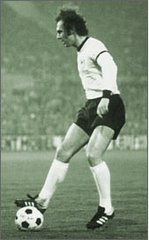
Another reason is political. The Nazi invasion of Holland in the World War is one that is almost always mentioned in the build up to any Dutch-German match up, and many see this as an inferiority complex in Holland’s disfavour. Yet when the Dutch found themselves a goal up inside a minute from Cruyff’s run and the penalty which it fashioned, they ‘forgot’ about the second goal and killing the game off. They wanted to embarrass their ‘German oppressors’, which their fellow finalists had no part in. This taunting football, angered the Germans, led by Beckenbauer, Der Kaiser, and soon they rallied, with Paul Breitner and Der Bomber, Gerd Muller scoring an awkward yet balletic goal. As the second half progressed, the Dutch played their usual game of ‘Total Football’, but could not breach the Deutsch rearguard, led by the original libero Beckenbauer.
What other reasons can one conjure up, rather than inferior quality? The fact that Cruyff, man-marked by Berti Vogts, played too deep in the first half to have impact through his sublime technical ability, shows that even a tactical genius such as the Dutchman himself is prone to flaws. Another reason, why defeat occurs is through refereeing decisions. The words by Beckenbauer to English referee Jack Taylor in the appeals to the first minute Dutch penalty award may have affected his unbiased view throughout the rest of the game. ‘You are an Englishman’ must have echoed through his mind when awarding a penalty to the Germans, for which Holzenbein dived. This was countered when he disallowed a potential second Muller goal for offside, perhaps in his mind evening up the consequences of his previous decision.
Rene Mercet is a name which lies with Italy’s 1934 World Cup success. The Swiss referee had a hand in Italy’s path to World Cup glory. With the use of this global sporting event hosted in Italy, Mussolini used it to his advantage to promote his fascist views. Mercet is thought to have favoured Italy through controversial refereeing decisions, seen in Italy’s 7-1 win against the USA and the Quarter Final replay against Spain. He was later suspended by the Swiss Football Federation. Calls for use of goal-line technology were heightened when teams were saved from defeat due to a lack of communication. The first incident was in early 2005, when Pedro Mendes’s shot from 50 yards was fumbled by then United keeper Roy Carroll, but the linesman Rob Lewis defends the ‘non-goal’ claiming he was ‘doing my primary job’ which was ‘watching for offside’. Worse was the ‘lack of concentration’ in a regional tournament in the state of Sao Paulo, where female referee Silvia Regina de Oliveira awarded a goal when a ball boy kicked the ball in jest into the net, allowing Santacruzense to draw level late into the game. As was the case with Cruyff’s decision not to go to the 1978 World Cup, the decision was blamed on his wife Danny; it seemed easy to blame defeat on women then.
Unlike Mussolini, who was promoting his Fascist party, Franco, the notorious Spanish dictator, used to apparently allow Barcelona the occasional victory in the El Clasico derby in order exploit morbo, and in this way he portrayed the Catalan club and everything connected with it to be taboo. He banned Catalan to be spoken amongst other things. In 1943, Barcelona were 3-0 up front the first leg in the King’s cup match, and lost 11-1 in the second leg after a visit before the game from the director of state security threatening the players that they are only living in the country due to the generous nature of Franco. This bullying nature still appears to live on in Madrid through their tactics in the transfer market.
The final reason is financial. Of course aside from the watch worth £18,000, that Moggi gave to a referee in Italy, in return for certain favours within the recipient’s profession, there lies a reason why defeat occurs instead of corruption and match-fixing. Conspiracy theorists will be glad to see the return of contemplating the reason of Ronaldo’s zombie-esque movement in the 1998 World Cup final. Many say it was a fit of some sort, but what was the reason for the inclusion in the starting XI? Perhaps a boot contract that requires him to play? This was also reported to be the case why Rensenbrink of the Netherlands played in the 1974 final, when it was clear he was not fit with a thigh injury.
Or maybe you could forget all this and just believe Ronaldo’s input, which is to put it simply: difference in quality, conceding goals and also poor team performance.
On a number of occasions, the defeat is often self-inflicting, with poor tactics being exploited by the opposition team, with the manager being criticised. For example in 1950, Brazil’s reliance on the opposition playing the WM formation (devised by Herbert Chapman of Arsenal), which they easily took apart, was the predominant factor in their 2-1 defeat to Uruguay. The Uruguayans, in contrast to Spain and Sweden took up an offensive looking formation, and found faults in the Brazilians defensive line, which was covered up by their brilliant attacking play. The consequence of the defeat was so great that even now it is seen as the greatest national tragedy in Brazilian history, where the overwhelming favourites lost. According to Alex Bellos’s Futebol, in the 28th minute, Obdulio hit Bigode, Brazil's left half, and this punch changed the psychological advantage that Brazil had over their opponents. And in the 79th minute, Gigghia caught out Barbosa, by shooting at the near post rather than crossing as he did for Uruguay’s first goal. It is now known as The Fateful Goal.
A similar national tragedy occurred in 1974, when Rinus Michels reunited the majority of the legendary Ajax team for the World Cup. Similar to 1950, the fate of the final had already been sealed according to the public and the media. Jules Rimet had already prepared a speech in Portuguese; The Brazilian Federation had ordered gold medals for the players and for the 173,850 Brazilians, losing to local rivals, recently disposed of, in front ‘almost 10%’ of Rio’s population’, a world record at the time, according to Bellos. Countless books and articles have been published since then, analysing why such an impossible result had indeed happened. Overwhelming favourites in Germany 1974, against the hosts themselves, this defeat is blamed on a plethora of reasons, but most intriguingly against Bild, the German tabloid, who ran a story of a pool party before the final itself. The party may have caused a change in mood in the Dutch camp, with the wives and girlfriends calling to seek the truth. In the years after the defeat, they acknowledge its existence, but deny their partners’ involvement in it.
Another reason is political. The Nazi invasion of Holland in the World War is one that is almost always mentioned in the build up to any Dutch-German match up, and many see this as an inferiority complex in Holland’s disfavour. Yet when the Dutch found themselves a goal up inside a minute from Cruyff’s run and the penalty which it fashioned, they ‘forgot’ about the second goal and killing the game off. They wanted to embarrass their ‘German oppressors’, which their fellow finalists had no part in. This taunting football, angered the Germans, led by Beckenbauer, Der Kaiser, and soon they rallied, with Paul Breitner and Der Bomber, Gerd Muller scoring an awkward yet balletic goal. As the second half progressed, the Dutch played their usual game of ‘Total Football’, but could not breach the Deutsch rearguard, led by the original libero Beckenbauer.
What other reasons can one conjure up, rather than inferior quality? The fact that Cruyff, man-marked by Berti Vogts, played too deep in the first half to have impact through his sublime technical ability, shows that even a tactical genius such as the Dutchman himself is prone to flaws. Another reason, why defeat occurs is through refereeing decisions. The words by Beckenbauer to English referee Jack Taylor in the appeals to the first minute Dutch penalty award may have affected his unbiased view throughout the rest of the game. ‘You are an Englishman’ must have echoed through his mind when awarding a penalty to the Germans, for which Holzenbein dived. This was countered when he disallowed a potential second Muller goal for offside, perhaps in his mind evening up the consequences of his previous decision.
Rene Mercet is a name which lies with Italy’s 1934 World Cup success. The Swiss referee had a hand in Italy’s path to World Cup glory. With the use of this global sporting event hosted in Italy, Mussolini used it to his advantage to promote his fascist views. Mercet is thought to have favoured Italy through controversial refereeing decisions, seen in Italy’s 7-1 win against the USA and the Quarter Final replay against Spain. He was later suspended by the Swiss Football Federation. Calls for use of goal-line technology were heightened when teams were saved from defeat due to a lack of communication. The first incident was in early 2005, when Pedro Mendes’s shot from 50 yards was fumbled by then United keeper Roy Carroll, but the linesman Rob Lewis defends the ‘non-goal’ claiming he was ‘doing my primary job’ which was ‘watching for offside’. Worse was the ‘lack of concentration’ in a regional tournament in the state of Sao Paulo, where female referee Silvia Regina de Oliveira awarded a goal when a ball boy kicked the ball in jest into the net, allowing Santacruzense to draw level late into the game. As was the case with Cruyff’s decision not to go to the 1978 World Cup, the decision was blamed on his wife Danny; it seemed easy to blame defeat on women then.
Unlike Mussolini, who was promoting his Fascist party, Franco, the notorious Spanish dictator, used to apparently allow Barcelona the occasional victory in the El Clasico derby in order exploit morbo, and in this way he portrayed the Catalan club and everything connected with it to be taboo. He banned Catalan to be spoken amongst other things. In 1943, Barcelona were 3-0 up front the first leg in the King’s cup match, and lost 11-1 in the second leg after a visit before the game from the director of state security threatening the players that they are only living in the country due to the generous nature of Franco. This bullying nature still appears to live on in Madrid through their tactics in the transfer market.
The final reason is financial. Of course aside from the watch worth £18,000, that Moggi gave to a referee in Italy, in return for certain favours within the recipient’s profession, there lies a reason why defeat occurs instead of corruption and match-fixing. Conspiracy theorists will be glad to see the return of contemplating the reason of Ronaldo’s zombie-esque movement in the 1998 World Cup final. Many say it was a fit of some sort, but what was the reason for the inclusion in the starting XI? Perhaps a boot contract that requires him to play? This was also reported to be the case why Rensenbrink of the Netherlands played in the 1974 final, when it was clear he was not fit with a thigh injury.
Or maybe you could forget all this and just believe Ronaldo’s input, which is to put it simply: difference in quality, conceding goals and also poor team performance.
Wednesday, 29 August 2007
Antonio Puerta: May He Rest in Peace
Sevilla’s Antonio Puerta’s death was confirmed three days after collapsing in their opening game of the season against Getafe. He was a promising, versatile footballer, with the world at his feet, and was about to become a father. Sevilla had postponed Tuesday's Champions league qualifier against AEK Athens and the Super Cup match against AC Milan but now it will be played in homage to the late Spanish footballer.
A short film showing the 22-year-old's career will be played before the game between the Champions League and Uefa Cup winners. Flags in the stadium will be flown at half mast, there will be a minute's silence and the players will wear black armbands.
I would like to refer you to a piece by Arseblogger, who put how the majority of the footballing world is feeling.
A short film showing the 22-year-old's career will be played before the game between the Champions League and Uefa Cup winners. Flags in the stadium will be flown at half mast, there will be a minute's silence and the players will wear black armbands.
I would like to refer you to a piece by Arseblogger, who put how the majority of the footballing world is feeling.
My deepest sympathies to Sevilla Fútbol Club and more importantly, the family of Puerta. RIP."Finally today I want to take a moment to talk about how sad I felt about the
death of Sevilla’s Antonio Puerta. I, like many of you, was watching the game on
Saturday night when he collapsed so we’ve been with him ever since. Seeing him
wheeled out of the ground and rushed away in an ambulance was sickening,
especially when you could tell by the paramedics that it was serious. There was
hope as many times in cases like this an athlete simply drops and that’s the
end. We saw it some years ago when Marc Vivien Foe died during the Confederations Cup.But as the days passed the doctors grew more pessimistic and yesterday afternoon Antonio Puerta passed away. For someone like me who plays park football and enjoys a pint and the odd smoke and doesn’t always stick to a healthy diet it’s quite sobering. A young man, less than 6 weeks away from being a father for the first time, is dead.
I’ve been reading the coverage in the Spanish papers and it’s heartbreaking stuff. Julio Baptista spoke of the enormous jolt of pain he felt when he heard. Messages of support and sympathy have flooded in from every Spanish club. Ex-teammate Antoñito declared himself ‘broken’ at the news. I listened to the President of Betis, Manuel Ruiz de Lopera, who has had the worst relationship with Sevilla FC and their President Jose Maria del Nido that you can possibly imagine, speak on the radio about Puerta’s death and the genuine emotion and solidarity for Sevilla, their fans and the family of Antonio Puerta was very moving.
Antonio Puerta will be buried today at 2pm Spanish time. A promising career and a young life cut short well before time. Perhaps, as we bitch and moan about not signing a fat Brazilian or any kind of winger, we might think about this and put it all in perspective.
I have never tried to speak on behalf of any other Arsenal fans, but I think I can do so today when I say to the family and friends of Antonio Puerta, everyone at Sevilla FC and all their fans, that we send our most sincere condolences and sympathy. May he rest in peace. "
Thursday, 23 August 2007
The Dark Horses of Europe
There are certain clubs where many feel the time has come, for glory again. Having lain dormant, they have to challenge again for the title and become national champions. Here is a preview of the underdogs in the various national leagues all around Europe.
England: Arsenal
A team in transition, the majority say…’you don’t win anything with kids’, Alan Hansen says…well the Arsenal camp has come out with several statements of a great team spirit, epitomised in the late goals against Fulham, the battling successes against Sparta and Blackburn. The season is long and hard, but while fellow rivals underestimate the North London team, on the basis of their summer spending, which was one of Wenger’s bigger expenditures in his time in charge of the Gunners, I believe that they shall quietly challenge without any big names and a team ethic.
Liverpool shouldn’t really be considered as a dark horse considering their current squad quality and depth, but not having won the league since 1989-90 means there is a pressure on the Anfield side, and the lack of domestic success means they are a huge outsider to break the recent Chelsea, Manchester United monopoly.
Italy: Fiorentina
Having not won Serie A since the ‘Italian Job’ was released in 1969, the Florence club have assembled an side, which can challenge the Champions league spots and even have an outside chance for the title. Toni may have been sold, but the funds have been used to build a youthful yet talented side, with the prolific (albeit at youth level) Lupoli, along with the other outstanding Belgian talent of his generation in Vanden Borre and other potential stars, the club can surprise a few giants this year, especially with future star Pazzini, who scored the first hat-trick in the new Wembley.
Juventus, having returned from their Serie B exile, still have the experienced Nedved, Trezeguet and club captain Del Piero, along with a number of talented youngsters. Part of the upper hierarchy at the club has been overturned and a new beginning is imminent.
Spain: Villarreal
Riquelme is at the centre of a transfer conundrum. Having decided that he is not important enough to have a team built around him, the Spanish side instead decided upon a team ethos. Gone too, is the prolific Forlan (well in Spain anyway). Long term injury victims Pires and Rodriguez have returned, along with Rio Mavuba, to give the team a technical and physical style.
Having spent big via the sale of star striker Torres, Atletico Madrid has a great chance to break into the top four. An encouraging pre-season along with impact from signings Reyes, Simao amongst others, has added to the underachieving side flair and a strong work ethic. Is it enough to mount an outside title challenge? Time will tell…
Germany:
Who in Germany is capable of surpassing Bayern Munich? Well apart from the current Champions from Stuttgart, naturally Bremen or Schalke 04 are considered. Both have had title bids in recent years, both are considered dark horses since Bayern’s summer shock therapy, which cost them near to €80 million. Having bought from their rivals in Altintop and Klose, they have strengthened as well as weakening the outside bets. As the Bundesliga progesses, it will be evident who will form the supposed chasing pack, especially when Werder have already been slaughtered by the Bavarian machine.
England: Arsenal
A team in transition, the majority say…’you don’t win anything with kids’, Alan Hansen says…well the Arsenal camp has come out with several statements of a great team spirit, epitomised in the late goals against Fulham, the battling successes against Sparta and Blackburn. The season is long and hard, but while fellow rivals underestimate the North London team, on the basis of their summer spending, which was one of Wenger’s bigger expenditures in his time in charge of the Gunners, I believe that they shall quietly challenge without any big names and a team ethic.
Liverpool shouldn’t really be considered as a dark horse considering their current squad quality and depth, but not having won the league since 1989-90 means there is a pressure on the Anfield side, and the lack of domestic success means they are a huge outsider to break the recent Chelsea, Manchester United monopoly.
Italy: Fiorentina
Having not won Serie A since the ‘Italian Job’ was released in 1969, the Florence club have assembled an side, which can challenge the Champions league spots and even have an outside chance for the title. Toni may have been sold, but the funds have been used to build a youthful yet talented side, with the prolific (albeit at youth level) Lupoli, along with the other outstanding Belgian talent of his generation in Vanden Borre and other potential stars, the club can surprise a few giants this year, especially with future star Pazzini, who scored the first hat-trick in the new Wembley.
Juventus, having returned from their Serie B exile, still have the experienced Nedved, Trezeguet and club captain Del Piero, along with a number of talented youngsters. Part of the upper hierarchy at the club has been overturned and a new beginning is imminent.
Spain: Villarreal
Riquelme is at the centre of a transfer conundrum. Having decided that he is not important enough to have a team built around him, the Spanish side instead decided upon a team ethos. Gone too, is the prolific Forlan (well in Spain anyway). Long term injury victims Pires and Rodriguez have returned, along with Rio Mavuba, to give the team a technical and physical style.
Having spent big via the sale of star striker Torres, Atletico Madrid has a great chance to break into the top four. An encouraging pre-season along with impact from signings Reyes, Simao amongst others, has added to the underachieving side flair and a strong work ethic. Is it enough to mount an outside title challenge? Time will tell…
Germany:
Who in Germany is capable of surpassing Bayern Munich? Well apart from the current Champions from Stuttgart, naturally Bremen or Schalke 04 are considered. Both have had title bids in recent years, both are considered dark horses since Bayern’s summer shock therapy, which cost them near to €80 million. Having bought from their rivals in Altintop and Klose, they have strengthened as well as weakening the outside bets. As the Bundesliga progesses, it will be evident who will form the supposed chasing pack, especially when Werder have already been slaughtered by the Bavarian machine.
Monday, 20 August 2007
The €30 Million Horror Show
Granted it was his first big game for the club, but on first impressions, class usually shines through and here it was a dark cloud that hung over the Bernabeu more so than anything else. When bombing forward with the ball, Pepe first seemed to be a reminder of Bayern’s Lucio, but when he stayed forward, leaving Cannavaro to defend against a dangerous and effective Sevilla attack, it clearly showed that he lacks the discipline to play in a top team.
The Real movement was very poor, which presented a lack of options to play the ball out of the defence, but when options were open he passed the ball either out of play or straight to the defence, with Sneijder, supposed to be providing an link throughout the team, virtually anonymous. The game passed Diarra by, a player more suited to perhaps a physical battle, not a common occurrence in Spain. The Midfield was too narrow, with Robinho, Drenthe, although he scored playing in each other’s space, allowing the Andalusian club to exploit the space with ease. A Kanoute hat-trick and Renato double sealed a convincing win over their title rivals.
The width came from the full backs, with Ramos capping an effective attacking performance with a goal, and this left Cannavaro playing against three men, with Drenthe always overlapping Robinho (in the second half, when he was moved back), and Ramos, practically the only effective outlet for the Madrid giants, and when that is the case, it is clear that the final outcome is not going to be great. While Alves was a force, with driving runs, the discipline of Poulsen and Renato covered their team-mate’s (a word not heard by the 11 footballers in the white shirts) place.
Eventually, his generally poor performance was worsened by a hand ball to clear the ball over the bar to concede a penalty and then a sending off. When Queiroz said he could have bought Pepe a number of years ago for €2 million, perhaps that value hasn’t risen, except through Calderon’s overindulgence in signing playing staff. Schuster has a huge job in overturning his side’s fortunes, and sorting the mental block of his players in not passing to one another quickly enough, after deciding that dribbling or a shot on goal is not possible. Schuster must build from the back in order to keep the vultures off his back. The return of his fellow countryman Metzelder will be crucial. However the link through the team, still hangs on Guti’s shoulders, who is a bit-part player, yet still turns the team’s game around in his substitute appearances. Sneijder will step into this role but the squad must remain the same for a team approach and spirit to be created.
Another sacking is imminent and a lack of continuity in Real’s play is evident, and with Calderon adopting this strategy of sack and hope, it appears that the Madrid club will not have a team (just 11 individuals) ready in time for the Madrid derby and first game of La Liga season.
The Real movement was very poor, which presented a lack of options to play the ball out of the defence, but when options were open he passed the ball either out of play or straight to the defence, with Sneijder, supposed to be providing an link throughout the team, virtually anonymous. The game passed Diarra by, a player more suited to perhaps a physical battle, not a common occurrence in Spain. The Midfield was too narrow, with Robinho, Drenthe, although he scored playing in each other’s space, allowing the Andalusian club to exploit the space with ease. A Kanoute hat-trick and Renato double sealed a convincing win over their title rivals.
The width came from the full backs, with Ramos capping an effective attacking performance with a goal, and this left Cannavaro playing against three men, with Drenthe always overlapping Robinho (in the second half, when he was moved back), and Ramos, practically the only effective outlet for the Madrid giants, and when that is the case, it is clear that the final outcome is not going to be great. While Alves was a force, with driving runs, the discipline of Poulsen and Renato covered their team-mate’s (a word not heard by the 11 footballers in the white shirts) place.
Eventually, his generally poor performance was worsened by a hand ball to clear the ball over the bar to concede a penalty and then a sending off. When Queiroz said he could have bought Pepe a number of years ago for €2 million, perhaps that value hasn’t risen, except through Calderon’s overindulgence in signing playing staff. Schuster has a huge job in overturning his side’s fortunes, and sorting the mental block of his players in not passing to one another quickly enough, after deciding that dribbling or a shot on goal is not possible. Schuster must build from the back in order to keep the vultures off his back. The return of his fellow countryman Metzelder will be crucial. However the link through the team, still hangs on Guti’s shoulders, who is a bit-part player, yet still turns the team’s game around in his substitute appearances. Sneijder will step into this role but the squad must remain the same for a team approach and spirit to be created.
Another sacking is imminent and a lack of continuity in Real’s play is evident, and with Calderon adopting this strategy of sack and hope, it appears that the Madrid club will not have a team (just 11 individuals) ready in time for the Madrid derby and first game of La Liga season.
Subscribe to:
Posts (Atom)